
Mockery towards "globalism". Zelensky-“Western Puppet”, "Romania, the greatest country in the world"
Mockery towards "globalism". Zelensky-“Western Puppet”, "Romania, the greatest country in the world"23/11/2025
What social media narratives dominated the electoral half-year period? An analysis of a corpus of 164,762 Facebook posts revealed key narratives and techniques were distributed across platforms.
This article was published on Euractiv.ro.
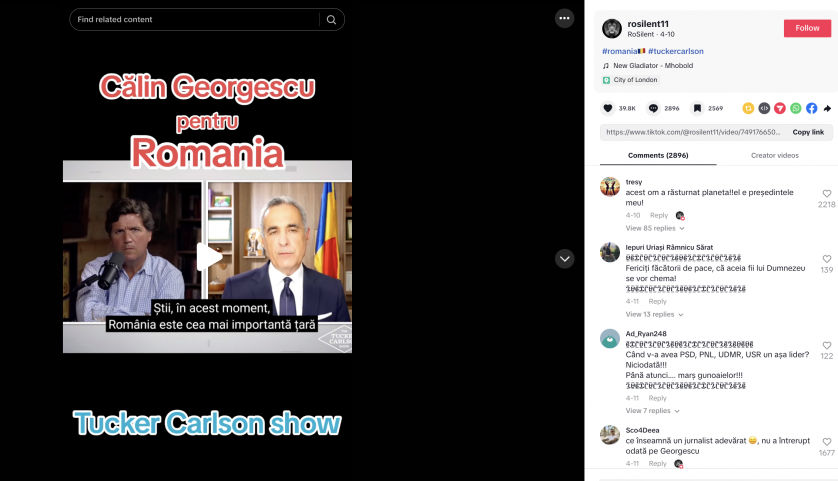
On 2025, April 10, Călin Georgescu, the TikTok-enhanced presidential candidate, praised Romania as the center of the world in an interview with MAGA-aligned Tucker Carlson: "Romania, the most important country in the world." "It is alpha & omega for a new era of peace, dignity and love."
In a world dominated by the importance of Romania, the Western was at the opposite end of spectrum. "I was denied by the globalist mafia", he said in the interview of April 10.
Sarcasm and ridiculisation, Pro-Russian and Anti-Ukrainian Narratives, Polarised Electoral Framing and Strategic Delegitimisation, anti-establishment, critical of centrist and pro-European parties, reflecting populist and anti-globalist attitudes, Western leadership, portrayed as "globalist mafia", which opposes peace - these are just a few conclusions drawn from the results obtained by analysing a corpus of 164,762 posts on social networks (Meta's Facebook).
The analysis consisted of a combination of methods: 1. automated content analysis with semantic-axiological matrix, and 2. network analysis (temporal analysis following Saqr, comparison of CooRTweet and Saqr Methods, Intra-platform vs. Cross-platform analysis of disinformation narratives) - methodology described in full - pp. 10-38 in the Prompt Report#1).
The narratives spread in each of the communities included in the table were analysed separatly in the report #1.
Narratives and disinformation techniques
Sarcasm and ridiculisation
The coordinated accounts distributed manipulated content containgng sarcasm and ridicule to attack to liberal institutions, Western alliances, and liberal/progressive values, targeting pro-Western figures while favouring anti-globalist or Russia-aligned actors. It reflects a right-wing populist, nationalist, and sovereigntist worldview, mockering gender politics, mainstream media, and liberal norms.
Pro-Russian / Anti-Ukrainian Narratives, Zelensky, portrayed as "dictator", "incompetent" and "puppet"
The narrative is sympathetic to Vladimir Putin and hostile toward Ukraine's leader, Volodimir Zelensky, portraying it as "incompetent" or a "Western puppet". In an in an oxymoronic manner, Zelenski is "dictator" in some of the narratives, while "dictator" in others.
Examples include sarcastic remarks like, "Zelensky’s victory plan succeeded - we’re just waiting for confirmation,” and "Dictator Zelensky embarrassed himself by not taking Moscow in 3 days.”
The discourse draws on disinformation, denies Ukrainian sovereignty, ridicules Western alliances like the G7, and undermines international support for Ukraine.
Other examples:
Disbelief in Ukraine’s military achievements ("Zelensky’s victory plan succeeded — we’re just waiting for confirmation”).
Mockery of early optimism about Ukraine’s war efforts ("Dictator Zelensky embarrassed himself by not taking Moscow in 3 days.”).
Claims such as "Zelensky banned the Orthodox Church in Ukraine” circulated widely on social media during the Romanian presidential elections, echoing common Russian disinformation narratives.
Romanian Politicians (Ciolacu, Iohannis, Ciucă, Lasconi, Geoană) - subject of mockeries and anti-system remarks
Tone ranges from satirical to openly hostile, highlighting incompetence, corruption, or dishonesty.
Examples: Ciucă was mocked for saying, "I don’t see myself as president”; Lasconi, criticised for allegedly lying about her education; Geoană, ridiculed for "plagiarising NATO’s colours to the comma.”
Narrative is anti-establishment, critical of centrist and pro-European parties, reflecting populist and anti-globalist attitudes.
Western values, under attack with words like "globalist mafia"
Western leadership is portrayed as globalist mafia, which opposes peace. Commentary is sarcastic and hostile toward liberal/progressive values, mocking gender identity and Western cultural norms. Fluid identity gender, as an alleged Western value, is a highly used topic. Examples: "Your husband today can be someone’s wife tomorrow”
Narrative is anti-progressive, anti-"woke,” and aligned with right-wing cultural conservatism.
Praise to Putin and BRICS
The discourse on Russia and its allies generally leans positive or neutral, often conveyed through ironic praise.
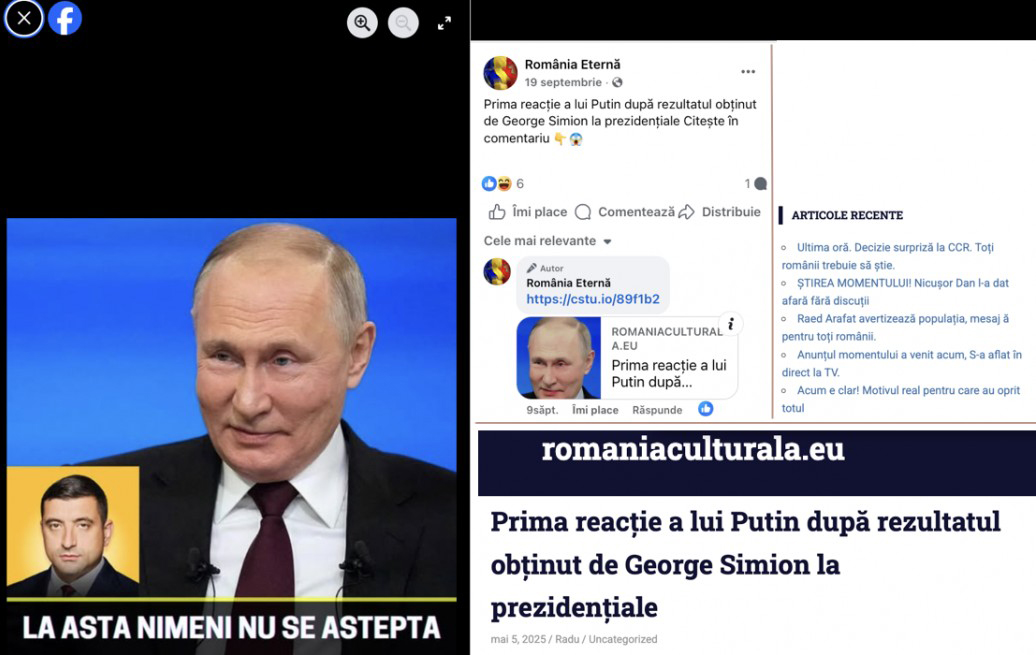
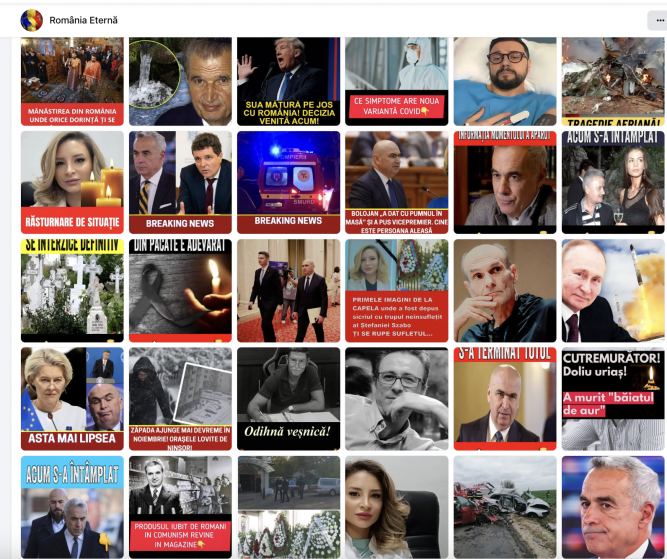
Some posts express subtle admiration for Vladimir Putin, as in the comment, "Hmm, that smile gives the West a headache,” portraying him as a figure who can unsettle Western powers.
This ironic tone frames Russia as strategically capable and influential.Posts about BRICS emphasize its economic strength, such as "GDP growth data of BRICS vs. G7 in 2024,” suggesting a potential shift in global power away from the West. Collectively, these narratives support a pro-Russian perspective, promoting the idea of a multipolar world order and positioning Russia and BRICS as viable alternatives to Western dominance.
The discourse exhibits a broadly right-wing populist orientation, emphasizing nationalism, anti-globalism, and pro-sovereignty themes. There is consistent criticism of NATO, the EU, and Western institutions, often expressed through satire, irony, and meme-like rhetoric. Progressive politics and liberal social norms are frequently ridiculed, while some content echoes Putin-friendly narratives, including the denigration of Ukraine’s military efforts, highlighting BRICS economic performance, and undermining NATO’s credibility.
Humor and ridicule are central strategies
Humor and ridicule are used to delegitimise liberal democratic institutions, Western alliances (NATO/EU/USA), and perceived elite narratives. Centrist and pro-Western Romanian politicians- such as Ciolacu, Geoană, Iohannis, and Lasconi - are particularly targeted, while figures or narratives aligned with Russia, anti-globalism, or alternative geopolitical poles like BRICS are portrayed more favourably or neutrally. The discourse also critiques gender politics and Western liberal values, reinforcing a culturally conservative, nationalist worldview. Overall, the framing combines populist messaging with sarcastic, ironic commentary to challenge mainstream narratives and promote an alternative, sovereigntist perspective.
Another part of the corpus, largely sourced from Antena 3 CNN, reflects a fragmented and tense electoral climate. Narratives range from anti-elite populism (Simion, Georgescu) to reformist centrism (Lasconi, Dan), amid internal instability in PSD, PNL, and USR. Coverage emphasises scandal, delegitimisation, and fears of foreign interference, especially from Russia. AUR and Simion are both subject to scandals and framed as anti-system alternatives; Lasconi and USR are alternately supported and undermined, often through gendered conflict frames; mainstream parties are portrayed as ineffective or collapsing. Overall, the rhetoric highlights sovereigntist sentiment, media dramatisation, and political distrust.
Polarised Electoral Framing and Strategic Delegitimization Another part of the corpus reflects a highly polarised political discourse, structured around stark ideological binaries: reform vs. corruption, Europe vs. Russia, and civic modernity vs. extremist regression. Elena Lasconi and USR serve as the primary voices for pro-European, anti-corruption, and civic reform narratives. In contrast, PSD and PNL, despite their formal pro-European stance, are heavily criticized as corrupt, stagnant, and complicit in maintaining a captured state. Extremist parties like AUR and SOS România are portrayed as socially regressive and aligned with Kremlin interests. Overall, the public narrative is strongly anti-system but divided on solutions: populist-nationalist versus liberal-reformist approaches. Distrust in domestic institutions is widespread, though selective confidence is placed in the EU and NATO. The discourse favors center-right, reformist, and pro-Western positions, elevating Lasconi and USR while delegitimising both traditional elites (PSD, PNL) and radical alternatives (AUR, SOS) through a mix of anti-corruption, anti-Kremlin, and civic moralisation.